⚡️ Use Materialized Views for Precomputed Results
A materialized view is a database object that stores the result of a query physically on disk, unlike regular views which execute the query every time they’r...
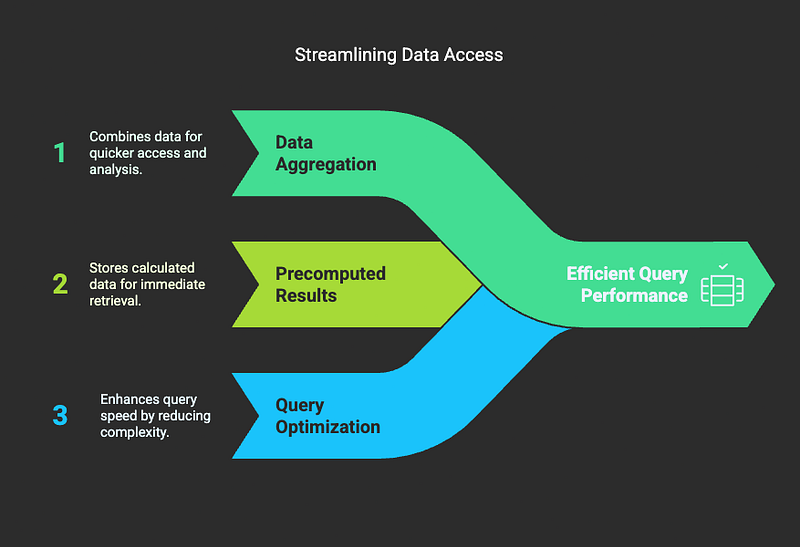
⚡️ Use Materialized Views for Precomputed Results
📌 What Are Materialized Views?
Amaterialized viewis a database object that stores the result of a query physically on disk, unlike regular views which execute the query every time they’re accessed. It’s like caching the result of a complex join or aggregation so that it doesn’t have to be recomputed repeatedly.
They’re especially useful when:
- Queries involve expensive joins or aggregations.
- Data changes are infrequent.
- You need fast, repeated access to complex computed results.
🚀 Benefits of Materialized Views
🔧 How to Create and Use Materialized Views
✅ PostgreSQL Example
CREATE MATERIALIZED VIEW monthly_sales_summary ASSELECT customer_id, DATE_TRUNC('month', order_date) AS sales_month, SUM(order_total) AS total_salesFROM ordersGROUP BY customer_id, DATE_TRUNC('month', order_date);
Access it like a normal table:
SELECT * FROM monthly_sales_summaryWHERE sales_month = '2024-12-01';
🔁 Refreshing the View
REFRESH MATERIALIZED VIEW monthly_sales_summary;
👉 Add WITH DATA (default) or WITH NO DATA during creation.
✅ Oracle Example
CREATE MATERIALIZED VIEW customer_sales_mvBUILD IMMEDIATEREFRESH FAST ON DEMANDASSELECT customer_id, SUM(order_total) AS total_spentFROM ordersGROUP BY customer_id;
✅ SQL Server (Workaround)
SQL Server doesn’t support true materialized views, but you can simulate them usingindexed views.
CREATE VIEW top_customers WITH SCHEMABINDING ASSELECT customer_id, COUNT_BIG(*) AS order_countFROM dbo.ordersGROUP BY customer_id;CREATE UNIQUE CLUSTERED INDEX idx_top_customers ON top_customers(customer_id);
⚠️ When to Use Materialized Views
✅ Use it when:
- Your queries are read-heavy and data doesn’t change frequently.
- You need low-latency access to derived/aggregated data.
- Complex calculations make live querying inefficient.
❌ Avoid if:
- Your underlying data changes rapidly.
- The overhead of refreshing outweighs the read-time benefits.
📊 Performance Comparison
🎯 Pro Tip
You can schedule materialized view refreshes using:
- PostgreSQL + Cron
- Oracle DBMS_SCHEDULER
- Custom logic in app layer for MySQL
✅ Final Thoughts
Materialized views are a powerful way to boost read performance for complex, repetitive queries. By precomputing and caching heavy operations, you can drastically reduce query time and resource usage — making them a secret weapon in your database optimization arsenal.