Keep Statistics Updated for Optimal Query Performance
What Are Database Statistics?
What Are Database Statistics?—
Keep Statistics Updated for Optimal Query Performance
What Are Database Statistics?
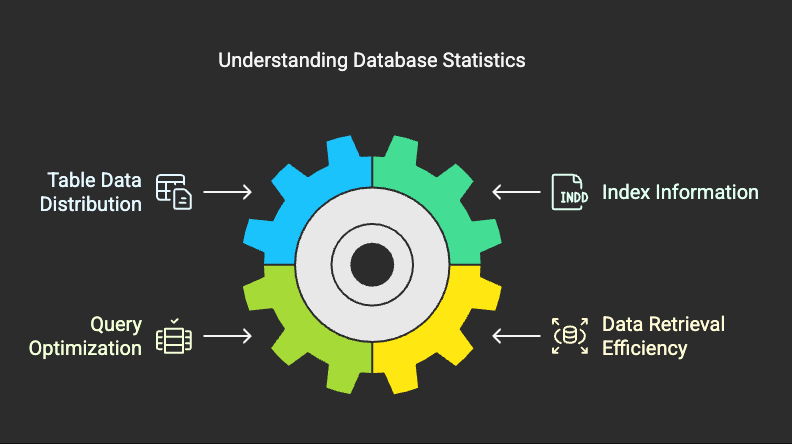
Database statistics are metadata that provide the query optimizer with critical information about the data stored in tables and indexes. These statistics help the database engine make informed decisions on query execution plans, ensuring efficient data retrieval.
Key Elements of Database Statistics:
- Row Count: The total number of rows in a table.
- Column Cardinality: The number of distinct values in a column.
- Histograms: Data distribution patterns that help in estimating selectivity.
- Density Metrics: The frequency of duplicate values in a column.
- Index Usage Data: Information on how frequently indexes are accessed.
The database query optimizer relies heavily on these statistics to determine the best way to execute queries. If statistics are outdated, the optimizer might generate inefficient execution plans, resulting in slow query performance and excessive resource usage.
Why Keeping Statistics Updated Matters
1. Improves Query Execution Plans
The query optimizer depends on accurate statistics to generate efficient execution plans. Updated statistics ensure that the optimizer selects the best index, join method, and filtering approach, leading to faster queries.
2. Prevents Performance Degradation
Outdated statistics can cause the optimizer to make poor decisions, such as using a full table scan instead of an index seek. This results in high CPU usage, increased I/O operations, and slow response times.
3. Essential for Large Databases
For large databases with millions of records, outdated statistics can severely impact performance. Keeping them updated ensures that complex queries run efficiently without unnecessary overhead.
How to Keep Statistics Updated
1. Enable Auto-Update for Statistics
Most modern database management systems (DBMS) offer anauto-updatefeature for statistics. This setting automatically refreshes statistics when a significant number of rows are inserted, updated, or deleted.
•MySQL: ANALYZE TABLE table_name;
•PostgreSQL: ANALYZE table_name;
•SQL Server: UPDATE STATISTICS table_name;
2. Manually Refresh Statistics
In some cases, especially for large or frequently updated tables, manual intervention is necessary to update statistics.
Example:
-- Update statistics for a specific table (SQL Server)UPDATE STATISTICS employees;
-- Recompute statistics for all tables (PostgreSQL)ANALYZE;
3. Schedule Statistics Updates
For databases with heavy workloads, schedule periodic updates to ensure statistics stay fresh. This can be done using database jobs or cron jobs.
Example (SQL Server):
EXEC sp_updatestats;
Example (PostgreSQL — cron job):
0 2 * * * psql -U myuser -d mydb -c "ANALYZE;"
4. Use Histogram Updates
Some databases supporthistogram updatesfor better query optimization. These histograms store detailed data distribution, helping the optimizer make better estimations.
-- PostgreSQL exampleANALYZE VERBOSE employees;
Why Manual Updates Are Still Needed If Auto-Update Exists
Although most databases provide an automatic statistics update feature, it may not always be sufficient. Here’s why manual updates are sometimes necessary:
1. Auto-Update Triggers Based on Thresholds
- DBMS auto-update statistics when a certain percentage of rows change (e.g., 20% in SQL Server).
- If a table is massive, this threshold may not be met quickly, leading to stale statistics.
2. Large Bulk Operations Are Not Always Handled Well
- When millions of rows are inserted, updated, or deleted, the auto-update may not run immediately.
- Manually refreshing statistics ensures the optimizer is aware of the changes promptly.
3. Auto-Update Can Miss Edge Cases
- Some databases only update statistics when queries run, meaning a rarely queried table may have outdated stats.
- Manually triggering updates can help optimize queries that run sporadically but require high performance.
4. Performance Considerations
- Auto-updating statistics can introduce overhead when done during peak hours.
- Manual updates allow scheduling at off-peak hours to minimize performance impact.
When Should You Update Statistics?
- After a large batch insert, update, or delete operation.
- When query performance starts degrading unexpectedly.
- After creating or modifying indexes.
- On a regular schedule for high-traffic databases.
Conclusion
Database statistics play a crucial role in query optimization. Keeping them updated ensures faster query execution, reduces resource usage, and prevents performance bottlenecks. Whether using auto-update features or manual refresh strategies, maintaining accurate statistics is a best practice for every database administrator and developer.