The Multitasking Myth: Why Your Brain is Sabotaging Your Productivity (and What to Do About It)
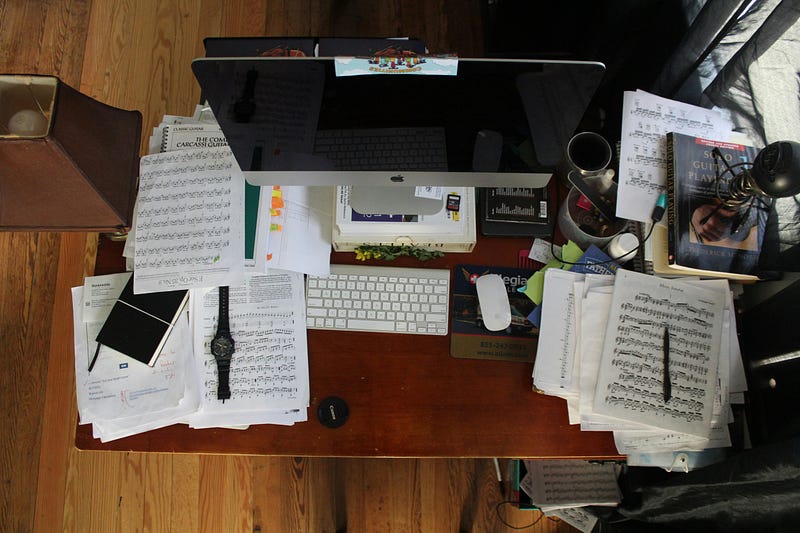
Photo by Jesus Hilario H. on Unsplash You’re not a multitasking wizard — and science proves why that’s okay
The Multitasking Myth: Why Your Brain is Sabotaging Your Productivity (and What to Do About It)
You’re not a multitasking wizard — and science proves why that’s okay
I still remember the look on my manager’s face when I told him, “I can only do one thing at a time.” His disappointment was palpable. In that moment, I felt like I’d failed some essential test of professional capability.
“You have to multitask in this role,” he insisted. “Everyone does.”
But deep down, I knew the truth: whenever I tried juggling multiple tasks simultaneously, my work suffered. The quality dropped, deadlines slipped, and my stress skyrocketed. It wasn’t laziness or incompetence — it was simply how my brain worked best.
Perhaps you’ve felt this same pressure. The expectation to constantly switch between projects, respond to messages, attend meetings, and somehow still produce meaningful work is the unspoken requirement of modern professional life.
But what if I told you my “limitation” wasn’t a weakness at all — but actually aligned perfectly with how the human brain is designed to function?
We’ve all been there: juggling emails, messaging colleagues, and attempting to complete that important project — all seemingly at once. In today’s hyperconnected world, multitasking feels like a superpower we need to master.
But what if I told you multitasking is actually making youlessproductive?
“Multitasking is not for humans; those who do that cannot actually execute with precision.”
This isn’t just one professional’s opinion — it’s backed by decades of neuroscience research. The truth is startling:our brains simply aren’t built for multitasking, and attempting to do so is actually undermining your performance every single day.
The Uncomfortable Truth About Your Brain
Here’s what’s really happening when you think you’re multitasking:
Your brain isn’t processing multiple tasks simultaneously — it’srapidly switching between them. Each of these switches comes with a hidden cost: mental reorientation that drains your cognitive resources and increases fatigue.
Stanford University researchers discovered something fascinating when studying “heavy media multitaskers” (those constantly juggling digital platforms). Not only did these multitaskers perform worse on attention tests, but they were also what researchers called “suckers for irrelevancy” — unable to filter distractions effectively.
As cognitive scientist Cliff Nass bluntly explained:“The brain just can’t do it.”
This research validated what I’d always felt intuitively. In those rare moments when I could focus single-mindedly on one objective — whether completing a complex report or solving a technical problem — I consistently produced my best work. The quality was higher, the solutions more creative, and ironically, the completion time often shorter than when I attempted to “multitask.”
The Real Cost of Task-Switching
The numbers are sobering:
- Each quick check of your phone can waste up to25 minutesof refocusing time
- Task-switching can reduce efficiency by30–40%
- Attempting to multitask while performing cognitive tasks has been shown to cause an IQ drop of10 points— equivalent to missing an entire night’s sleep
Think about that: your “productive multitasking” might be having the same cognitive effect as pulling an all-nighter. That presentation you’re working on while responding to Slack messages? It’s taking longer and containing more errors than if you’d focused on one task at a time.
Even more concerning, research shows that chronic multitaskers experience higher cortisol levels (indicating stress), greater impulsivity, and diminished ability to concentrate over time.
I experienced this firsthand during a critical project last year. When I allowed myself to be pulled in multiple directions — constantly checking email, attending “quick” meetings, and responding to “urgent” requests — my primary deliverable suffered. The work took longer, required more revisions, and left me mentally exhausted.
The Single-Task Revolution
The good news? Once you embrace how your brainactuallyworks, you can transform your productivity.
When you give undivided attention to one task, something magical happens. Your brain’s specialized networks fully engage, filtering irrelevant inputs and allowing you to enter a state of deep focus. This is where quality work, creative insights, and efficient problem-solving happen.
As neuroscience confirms:We are single-taskers by design.
I eventually had a frank conversation with my manager. Rather than apologizing for my single-tasking approach, I showed him the results: when given uninterrupted time for focused work, I consistently delivered higher quality outputs, often ahead of schedule. The evidence was compelling enough that we worked together to restructure my workdays, creating protected blocks for deep focus.
The transformation wasn’t just professional — it was personal. The mental clarity that came from embracing single-tasking reduced my anxiety and restored my confidence. I wasn’t broken; I was simply working with my brain’s natural strengths rather than against them.
6 Science-Backed Strategies to Harness Your Brain’s True Power
Ready to stop fighting your brain’s natural wiring? Here’s how to leverage single-tasking for dramatic productivity improvements:
1. Embrace the Power of One
Try this:Identify your most important task each morning and work on it exclusively for 90 minutes before opening email or messaging apps.
This simple change revolutionized my mornings. Instead of immediately diving into the reactive mode of responding to others’ priorities, I now make meaningful progress on my most important work before the day’s distractions begin.
2. Block Your Calendar Against Task-Switching
Try this:Create “focus blocks” of 30–60 minutes in your calendar where you commit to working on one project without interruption. Protect these blocks as seriously as you would an important meeting.
I’ve found that labeling these blocks with specific deliverables helps colleagues respect these boundaries. “Working on quarterly forecast model” carries more weight than simply “Focus time.”
3. Create a Distraction-Free Zone
Try this:Before beginning important work, put your phone in another room, close unnecessary browser tabs, and disable notifications. The physical distance from potential distractions dramatically reduces the temptation to switch tasks.
My personal game-changer was creating a designated workspace that signals “deep work mode” to both my brain and my teammates. When I’m in this space, interruptions are limited to true emergencies.
4. Implement Strategic Break Cycles
Try this:Use the Pomodoro Technique — 25 minutes of focused work followed by a 5-minute break. These structured pauses prevent burnout while maintaining momentum.
I was skeptical about taking more breaks, fearing I’d lose precious time. Instead, I discovered these intentional pauses actually extended my ability to maintain focus throughout the day.
5. Define Crystal-Clear Next Actions
Try this:Before starting work sessions, write down the specific task you’ll accomplish. Vague goals invite distraction; precise objectives keep your brain on track.
My productivity journal has become my secret weapon. Each morning, I define exactly what “done” looks like for my priority tasks, eliminating the ambiguity that often triggers task-switching.
6. Train Your Attention Muscle
Try this:Practice 5 minutes of mindfulness meditation daily. Research shows this simple habit strengthens your brain’s ability to maintain focus and resist distraction.
I was initially resistant to meditation, viewing it as too “woo-woo” for my practical needs. But starting with just 3 minutes of focused breathing each morning has noticeably improved my ability to stay present with challenging tasks.
The Productivity Paradox
The ultimate irony? By doing less simultaneously, you accomplish more overall.
When you honor your brain’s single-processing design, work quality improves, completion time decreases, and — perhaps most importantly — your sense of progress and accomplishment grows.
In our culture that glorifies “busy,” embracing single-tasking feels counterintuitive. But the science is clear:real productivity comes from real focus, one task at a time.
Looking back, I realize that my “limitation” — the inability to effectively multitask — wasn’t a professional weakness but my greatest strength. By doubling down on deep, focused work, I’ve not only improved my performance but also reclaimed a sense of mastery and purpose that constant task-switching had eroded.
Your brain isn’t broken for wanting to concentrate. It’s working exactly as designed. The question is: will you continue fighting against your cognitive architecture, or start working with it?
I chose to embrace my single-minded nature, and it’s made all the difference. Perhaps it’s time you did the same.
What’s your biggest challenge with staying focused? How have you pushed back against the pressure to multitask? Share your experience in the comments below!